



TLR2
TLR2 is a plasma-membrane Toll-like receptor that supports innate immune surveillance by sensing microbial patterns and initiating inflammatory cytokine signaling[1]. Mechanistically, TLR2 functions through heterodimerization with TLR1 or TLR6, and ligand-triggered TLR2/1 or TLR2/6 complexes initiate downstream immune signaling[2]. In dendritic cells, TLR2-mediated uptake promotes clathrin-mediated endocytosis, Rab7 upregulation, and TAP-independent antigen cross-presentation, linking innate recognition to CTL priming[3]. In disease models, TLR2 activation participates in inflammatory bowel disease, traumatic deep venous thrombosis, hypoxic-ischemic brain damage, and splenic marginal zone lymphoma signaling[4][5][6][7]. Compared with nucleic-acid-sensing endosomal TLR3, TLR7, TLR8, and TLR9, TLR2 belongs to the non-endosomal receptor group and emphasizes cell-surface recognition with TLR1/TLR6 pairing[1][2]. For experimental applications, Pam3CSK4 is used as a TLR2 agonist, while C29, M2000, and phloretin have been reported to suppress TLR2-related inflammatory signaling in defined cell or animal models[4][5][8][9].
References:
- [1]. Lim KH, et al. Toll-like receptor signaling. Cold Spring Harb Perspect Biol. 2013 Jan 1;5(1):a011247. [Content Brief]
- [2]. Mansouri A, et al. Homology Modeling, Molecular Dynamics Simulation, and Prediction of Bovine TLR2 Heterodimerization. Int J Mol Sci. 2024 Jan 25;25(3):1496. [Content Brief]
- [3]. Shen KY, et al. Molecular mechanisms of TLR2-mediated antigen cross-presentation in dendritic cells. J Immunol. 2014 May 1;192(9):4233-41. [Content Brief]
- [4]. Wu W, et al. Endoplasmic reticulum stress is upregulated in inflammatory bowel disease and contributed TLR2 pathway-mediated inflammatory response. Immunopharmacol Immunotoxicol. 2024 Apr;46(2):192-198. [Content Brief]
- [5]. Guo T, et al. TLR2 promotes traumatic deep venous thrombosis of the lower extremity following femoral fracture by activating the NF‑κB/COX‑2 signaling pathway in rats. Exp Ther Med. 2024 Sep 20;28(6):436. [Content Brief]
- [6]. Gu Y, et al. Mesenchymal stem cells suppress neuronal apoptosis and decrease IL-10 release via the TLR2/NFκB pathway in rats with hypoxic-ischemic brain damage. Mol Brain. 2015 Oct 17;8(1):65. [Content Brief]
- [7]. Fonte E, et al. Toll-like receptor stimulation in splenic marginal zone lymphoma can modulate cell signaling, activation and proliferation. Haematologica. 2015 Nov;100(11):1460-8. [Content Brief]
- [8]. Aletaha S, et al. M2000 (β-D-Mannuronic Acid) as a Novel Antagonist for Blocking the TLR2 and TLR4 Downstream Signalling Pathway. Scand J Immunol. 2017 Feb;85(2):122-129. [Content Brief]
- [9]. Kim J, et al. Phloretin as a Potent Natural TLR2/1 Inhibitor Suppresses TLR2-Induced Inflammation. Nutrients. 2018 Jul 5;10(7):868. [Content Brief]
All Product Categories
-
TLR2 Related Products (38)
Related Products (38)

-
Recombinant Proteins (3)
- 1
- 2
-
Diprovocim-X
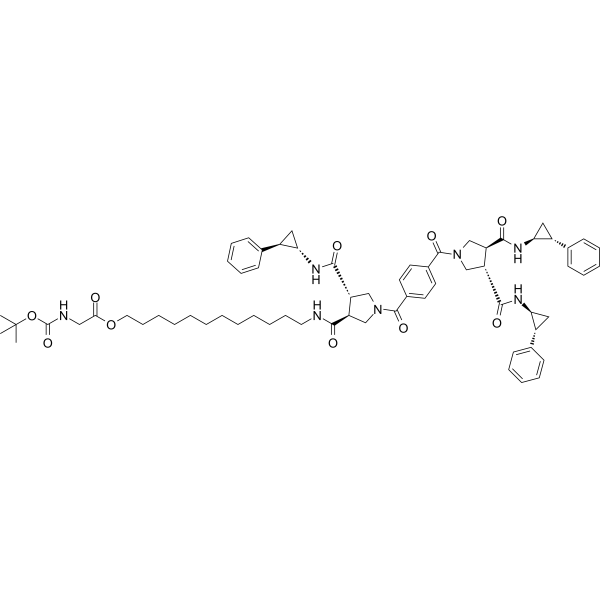 0 ImagesDiprovocim-X (compound 35) is a potent TLR1/TLR2 (toll-like receptor 1/2) agonist, with EC50 values of 0.14 and 0.75 nM for hTLR1/TLR2 and mTLR1/TLR2, respectively. Diprovocim-X is a potent adjuvant in vivo in mice, and serves to stimulate the adaptive immune response.

-
a15:0-i15:0 PE
 0 ImagesCat. No.: HY-N15936CAS No.: 2936622-21-6a15:0-i15:0 PE is an atypical TLR2 agonist, and its immune signaling strictly depends on the TLR2-TLR1 heterodimer. a15:0-i15:0 PE induces dendritic cells to produce TNFα and IL-6, but does not induce the production of IL-10 or IL-12p70. At low doses, a15:0-i15:0 PE resets the activation threshold of immune cells to suppress or regulate immune responses against specific agonists.
-
TLR2/9 antagonist 1
 0 ImagesCat. No.: HY-180507CAS No.: 2377679-85-9TLR2/9 antagonist 1 (Compound 24) is a reversible covalent TLR2 (IC₅₀ = 0.5 μM (TLR2/TLR6); IC₅₀ = 0.6 μM (TLR2/TLR1)) and TLR9 (IC₅₀ = 0.32 μM) antagonist. TLR2/9 antagonist 1 has no significant effect on other TLR subtypes. TLR2/9 antagonist 1 can be used for studying central nervous system diseases and malignant tumors caused by inflammation.
-
WYJ-2
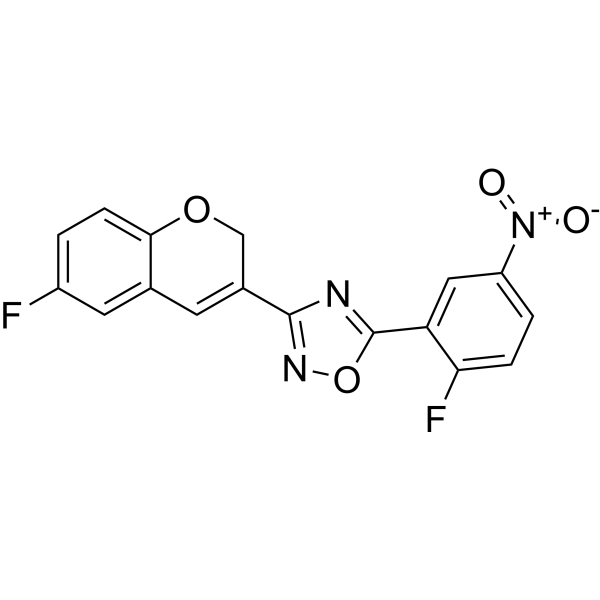 0 ImagesCat. No.: HY-158058CAS No.: 3029403-05-9WYJ-2 is a selective agonist for toll-like receptor 2/1 (TLR2/1) with EC50 of 18.57 nM in human TLR2 and TLR1 transient-cotransfected HEK 293T cells. WYJ-2 induces pyroptosis and exhibits anticancer activity against non-small cell lung cancer (NSCLC).
-
SMU-C68
 0 ImagesCat. No.: HY-175293CAS No.: 2677039-75-5
-
TLR2 antagonist-1
 0 ImagesCat. No.: HY-175533TLR2 antagonist-1 is a selective Toll-like receptor 2 (TLR2) antagonist. TLR2 antagonist-1 can effectively inhibit excessive TLR2 activation (IC50 = 11.41 μM) and the production of inflammatory factors. TLR2 antagonist-1 has metabolic stability with a half-life (T1/2) of 16.67 min in mouse liver microsomes. TLR2 antagonist-1 can be used for the researches of inflammation, immunology, and neurological disease.
-
Pam2CSK4
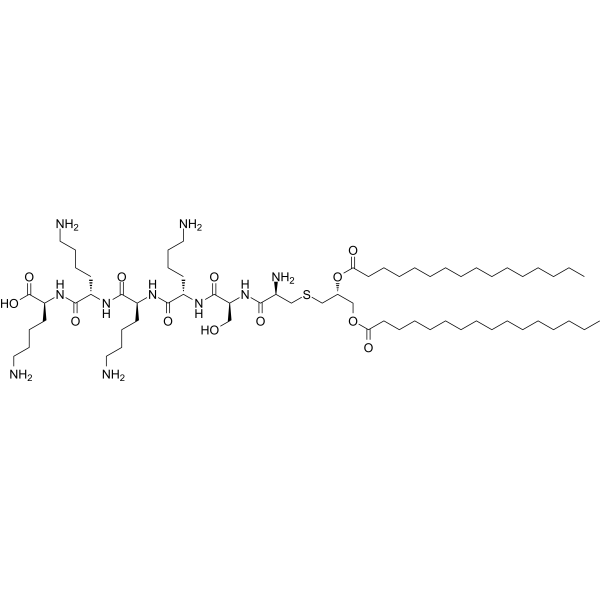 0 ImagesCat. No.: HY-P1181CAS No.: 868247-72-7Pam2CSK4 is a TLR2 agonist. Pam2CSK4 induces the expression of iNOS and NO in macrophage cell lines via TBK1 and MyD88 molecules. Pam2CSK4 activates the NF-κB and Bruton's tyrosine kinase signaling pathways in platelets, and promotes platelet-endothelial cell interactions. TLR2 activation triggered by Pam2CSK4 expands myeloid-derived suppressor cells (MDSCs) and suppresses anti-tumor immune responses in the tumor microenvironment. Pam2CSK4 acts as a Th2-polarizing adjuvant in mouse vaccine models against Leishmania major and Brugia malayi. Pam2CSK4 can be used in the research of various diseases, including thromboinflammatory diseases, sepsis, atherosclerosis, heart failure, influenza, lymphoma, melanoma, cutaneous leishmaniasis and lymphatic filariasis.
-
SjDX5-53
 0 ImagesCat. No.: HY-P10982CAS No.: 2767993-73-5SjDX5-53 is a selective TLR2 inducer derived from a 3 kDa peptide from Schistosoma japonicum eggs. SjDX5-53 inhibits inflammatory Th1 and Th17 responses by inducing tolerogenic dendritic cells (tolDCs) and promoting the generation of regulatory T cells (Tregs) and their suppressive capacity. SjDX5-53 is primarily used in the treatment of autoimmune and inflammatory diseases such as colitis and psoriasis.
-
Macrophage-activating lipopeptide 2
 0 ImagesCat. No.: HY-P10586CAS No.: 250718-44-6Synonyms: MALP-2Macrophage-activating lipopeptide 2 (MALP-2) is an agonist of Toll like receptors TLR-2/TLR-6. Macrophage-activating lipopeptide-2 can enhance endothelial nitric oxide synthase (eNOS) phosphorylation and endothelial cell release of NO, thereby improving vasodilation. Macrophage-activating lipopeptide-2 can enhance endothelial adhesion of white blood cells and improve perfusion recovery and collateral growth in the hind limbs of hypercholesterolemic Apoe deficient mice undergoing experimental femoral artery ligation (FAL).
-
BXY-14
 0 ImagesCat. No.: HY-181916BXY-14 is a TLR2 agonist and vaccine adjuvant. BXY-14 significantly downregulates the expression of intratumoral PD-L1 in mouse models. BXY-14 acts as a vaccine adjuvant to induce antibody responses. BXY-14 exhibits synergistic efficacy when combined with the anti-PD-L1 monoclonal antibody Atezolizumab (HY-P9904) in mouse models of melanoma, and prolongs overall survival. BXY-14 is applicable to research related to melanoma.
-
Pam3CSK4-Biotin
 0 ImagesCat. No.: HY-P1405CAS No.: 1429504-10-8Synonyms: Pam3Cys-Ser-(Lys)4-BiotinPam3CSK4-Biotin is biotinylated Pam3CSK4. Pam3CSK4-Biotin is a Toll-like receptor 1/2 (TLR1/2) agonist.
-
Ste2Cys
 0 ImagesCat. No.: HY-171239CAS No.: 656831-19-5Ste2Cys is a diacylglycerol cysteine-type immunologic adjuvant lipid molecule. Ste2Cys can bind to TLR2 and activate NF-κB signaling pathway. Ste2Cy can upregulate the expression of MHC II class molecules on the surface of mouse bone marrow-derived D1 dendritic cells. Ste2Cys can be used for research of the development of immunologic vaccines.
-
TLR2 agonist 1
 0 ImagesCat. No.: HY-163829CAS No.: 3093799-15-3TLR2 agonist 1 (Compound R-7d) is an agonist for human toll-like receptor 2 (TLR 2) with an EC50 of 116 pM. TLR2 agonist 1 enhances NF-κB promoter activation through TLR2/TLR1 heterodimers.
-
Rabeximod
 0 ImagesCat. No.: HY-14750CAS No.: 872178-65-9Synonyms: ROB-803Rabeximod (ROB-803), an anti-rheumatic compound, impairs the differentiation and function of human pro-inflammatory dendritic cells and macrophages via downregulating TLR2 and TLR4 stimulation. Rabeximod (ROB-803) is used for rheumatoid arthritis (RA) research.
-
P53/TLR2 modulator-1
 0 ImagesCat. No.: HY-173309P53/TLR2 modulator-1 (Compound Z9) is a modulator that targets both the P53 pathway and TLR2 simultaneously, exhibiting anti-radiation activity. P53/TLR2 modulator-1 reduces apoptosis by inhibiting the radiation-induced expression of P53 and Bax. At the same time, it activates the TLR2 pathway, upregulates the expression of downstream proteins MyD88 and P65, and promotes the secretion of cytokines such as IL-6, thus exerting an anti-radiation effect. P53/TLR2 modulator-1 shows significant anti-radiation activity against both AHH-1 cells and HUVECs. It can also increase the survival rate of C57BL/6J mice irradiated with a lethal dose of radiation and reduce the damage to their hematopoietic system, the villous structure of the small intestine, and the spleen caused by radiation. P53/TLR2 modulator-1 can be used in the research of radiation injury-related diseases.
-
Lard oil
 0 ImagesCat. No.: HY-W127601CAS No.: 8016-28-2Lard oil is an orally active biochemical reagent. Lard oil upregulates PERK, eIF2a, CHOP, OPN, TLR2, TLR4, TNF-α, and downregulates GRP78 and IRE1a. Lard oil induces responses such as body fat accumulation, elevated serum insulin levels, increased HOMA-IR, hepatic ectopic lipid deposition, hepatic endoplasmic reticulum stress, and hepatic inflammation. Lard oil can be used in studies related to diet-induced obesity, insulin resistance, and non-alcoholic fatty liver disease.
-
Creatine ethyl ester
 0 ImagesCat. No.: HY-165632CAS No.: 15366-29-7Synonyms: CEE
- 1
- 2




